How to Eat Chia Seeds for Maximum Benefits (6 Easy Ways)
Chia seeds are one of the easiest and most versatile superfoods you can add to your diet. This guide walks through six practical ways to prepare and eat chia seeds so you get the most nutrition — more fiber, plant-based omega-3s, calcium, and lasting energy. Each method includes serving guidance, quick recipes, and kitchen gear recommendations to make it simple to start today.
Quick links: Read the full pillar on 10 Proven Health Benefits of Chia Seeds, and compare seeds in our review Chia Seeds vs Flax Seeds. Use the interactive Chia Seed Nutrition Calculator to personalize serving sizes.
Why preparation matters
Chia seeds contain fiber, small amounts of protein, alpha-linolenic acid (ALA — a plant-based omega-3), and minerals like calcium and magnesium. How you prepare chia affects texture, palatability, digestion, and — importantly — satiety. The six methods below are chosen because they either improve digestion or combine chia with other ingredients that boost nutrient absorption and enjoyment.
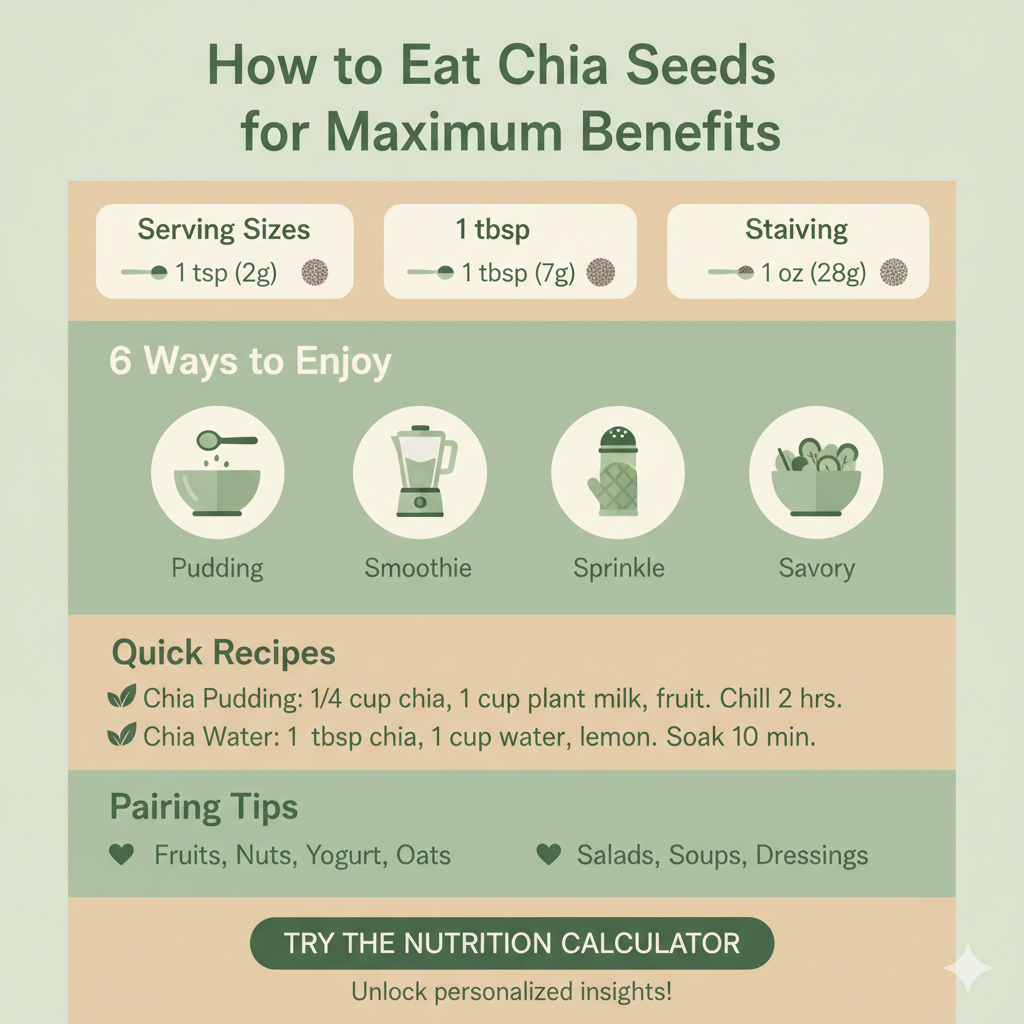
Quick serving guide
- Start small: 1 tsp–1 tbsp for beginners.
- Typical daily range: 1–2 tablespoons (10–30 g).
- Snack/pudding portion: 1 oz / ~28 g for a filling serving.
Method 1 — Soaked Chia Pudding (Best for satiety)
Soaking chia seeds forms a gel (mucilage) that slows digestion and increases fullness. This makes chia pudding excellent for breakfast or a mid-afternoon snack when you want sustained energy.
Serves 1
- 3 Tbsp chia seeds (≈28 g)
- 1 cup (240 ml) milk (dairy or plant)
- 1 tsp honey or maple syrup (optional)
- Toppings: berries, nuts, cinnamon
Mix chia and milk, whisk for 30 seconds, refrigerate 4+ hours (or overnight). Stir before serving and add toppings. Tip: blending briefly before refrigerating yields a smoother pudding.
Why it works
Gel formation increases gastric volume and slows glucose absorption, which can help control appetite and prevent mid-morning cravings.
Method 2 — Blended in Smoothies (Best for texture & balance)
Adding chia to smoothies helps distribute seeds evenly and hydrates them as the smoothie sits. Pairing chia with protein and healthy fat supports nutrient absorption and stable energy.
1 banana + 1 cup spinach + 1 cup almond milk + 1 Tbsp chia + 1 Tbsp nut butter. Blend until smooth. Serve immediately.
Gear tip (affiliate)
High-power personal blender (affiliate)
A compact blender makes morning smoothies quick and smooth. Choose one with at least 600–800 W for leafy blends.
Method 3 — Chia Water (Hydration + gentle appetite control)
Chia water is a convenient hydrator: simply mix chia with water and let it swell a bit. Many people drink it in the morning or before long errands to support hydration and satiety.
1 Tbsp chia + 12 oz (350–400 ml) water + squeeze of lemon. Stir, wait 10–20 minutes, then drink.
When to use
Use before meals for reduced hunger, or before long workouts for gentle slow-release carbs and hydration.
Method 4 — Raw Sprinkle / Topping (Quick & crunchy)
If you prefer crunch and texture, sprinkle ½–1 tsp chia over salads, oatmeal, or yogurt. This method is easy but doesn’t create the same gel (so less effect on satiety than soaked chia).
Method 5 — Ground Chia in Baking (for versatility)
Grinding chia slightly (or simply mixing into batter) can integrate it into breads, muffins, and bars. Keep in mind that while fiber remains, some sensitive omega-3s can oxidize with prolonged heat — use moderate baking temperatures and refrigerate baked goods to extend freshness.
Vegan egg-replacer
Use chia gel as a binder in vegan baking: 1 Tbsp chia + 3 Tbsp water = 1 egg equivalent (let sit 10 minutes).
Method 6 — Chia-Infused Cooking & Savory Uses
Chia works in savory dishes too — as a crust for fish, in salad dressings, or mixed into savory porridges. Its neutral flavor makes it easy to add to both sweet and savory preparations.
Coat salmon with a mix of 2 Tbsp chia + 1 tsp herbs + pinch salt. Bake at 350°F (175°C) for 12–15 minutes depending on thickness.
Nutrition snapshot & serving conversions
Here’s a quick nutrition snapshot so you know what you gain by adding chia to meals.
| Serving | Calories | Protein | Fiber | Omega-3 (ALA) |
|---|---|---|---|---|
| 1 tsp (≈5 g) | ≈25 kcal | ≈0.8 g | ≈1.9 g | ≈0.9 g |
| 1 tbsp (≈15 g) | ≈74 kcal | ≈2.4 g | ≈4.5 g | ≈2.7 g |
| 1 oz / 28 g | ≈137 kcal | ≈4.4 g | ≈10.6 g | ≈5.0 g |
Use our Chia Seed Nutrition Calculator to generate custom serving values and see the simple educational Health Benefit Score.
Pairing & absorption tips — maximize nutrient uptake
- Pair with healthy fats: nuts, seeds, or avocado help absorb fat-soluble nutrients and make meals more satisfying.
- Pair with vitamin C: berries or citrus help plant iron absorption.
- Combine with protein: Greek yogurt or plant proteins for better recovery and balance.
Kitchen gear that makes chia easy (affiliate)
Small, functional kitchen items speed up chia preparation and improve consistency — great for affiliate placement.
Compact blender for smoothies & puddings
A personal blender makes quick work of chia-smoothies and prevents seed clumps.
Mason jars for overnight pudding & storage
Use jars to prep breakfasts in advance — airtight, portable, and easy to label.
Common mistakes & how to avoid them
- Eating big dry amounts: Soak large portions to avoid throat irritation.
- Expecting instant weight loss: Chia helps satiety but is not a magic bullet — combine with a balanced diet and movement.
- Not storing properly: Keep chia in a cool, dark place and seal packages after opening.
Infographic prompt (designer / AI-ready)
Practical 7-day mini plan to try chia
Follow this simple week plan to get used to chia and notice effects on fullness and digestion.
- Day 1: 1 tsp sprinkled on yogurt.
- Day 2: 1 tbsp in a smoothie.
- Day 3: Chia water morning (1 tbsp in 12 oz water).
- Day 4: Overnight chia pudding (3 tbsp).
- Day 5: Add 1 tbsp ground chia to oats or porridge.
- Day 6: Chia energy balls as snack.
- Day 7: Try chia in a savory recipe (chia-crusted protein).
Safety, dosing & when to consult a professional
Chia is safe for most people. A common intake range is 1–2 tablespoons per day. If you have digestive disorders, are pregnant, or take blood-thinning medication, check with a healthcare provider before making major dietary changes. If you experience unusual allergic symptoms, stop use and seek medical advice.
FAQ
How quickly will I feel benefits from chia?
Immediate effects are usually related to satiety and digestion (within hours to days). Long-term benefits like improved lipid profiles or bone-health effects may take weeks to months and depend on overall diet and lifestyle.
Should I soak chia seeds or can I eat them raw?
Both are fine. Soaking is recommended for larger servings to improve texture and reduce choking risk. For sprinkling small amounts, raw seeds are convenient and nutritious.
Can chia seeds replace flax or hemp?
Chia complements other seeds. Each seed has a unique nutrient profile — use a variety (chia, flax, hemp) for broader benefits.
Conclusion
Choosing the right preparation method makes a big difference in how chia seeds affect your hunger, digestion, and nutrient intake. Soaked puddings and smoothies are excellent starting points for most people, while raw sprinkling adds texture. Use the recipes and serving ideas above, pick a high-quality organic chia brand, and consider kitchen gear that simplifies prep for consistent daily habits.
Buy organic chia seeds (affiliate)
Affiliate disclosure: AnaayaFoods may earn a commission on purchases made through these links at no extra cost to you.