Tiny seeds, big benefits — chia and flax are two of the most popular plant-based nutrition powerhouses. This in-depth guide compares chia seeds and flax seeds across nutrition, health benefits, culinary uses, and which one may be better for specific goals like weight loss, heart health, or brain support.
Quick link: Read our full pillar piece on chia seed benefits here — Benefits of Chia Seeds (Backed by Science). Try the interactive Chia Seed Nutrition Calculator to see nutrition by serving size.
Why compare chia and flax?
Both chia (Salvia hispanica) and flax (Linum usitatissimum) have been eaten for centuries. Modern nutrition science highlights their value as sources of fiber, plant-based omega-3s, protein, and micronutrients. On the surface they look similar — tiny, brown or golden seeds — but the differences matter when you care about absorption, culinary uses, and specific health goals.
At a glance: quick comparison
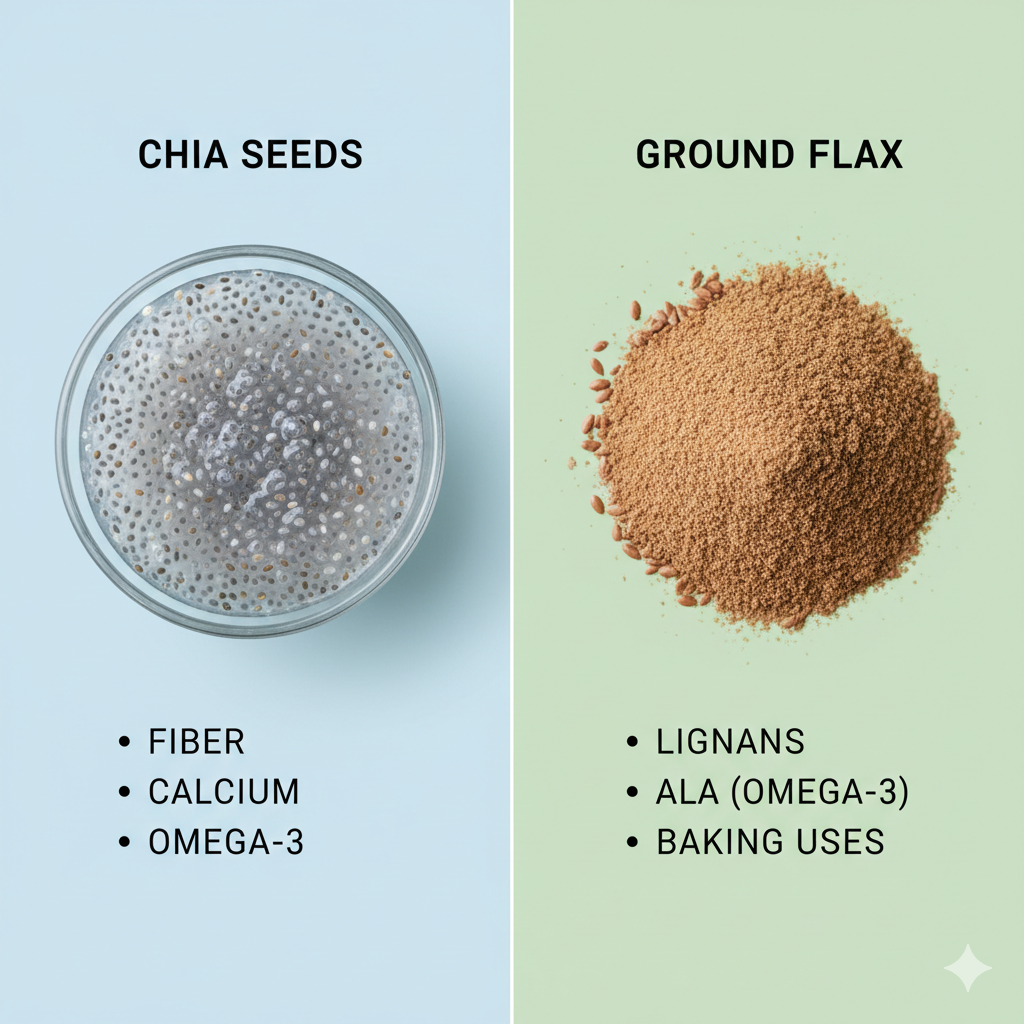
Chia — Strengths
- Excellent source of soluble fiber (forms a gel when soaked).
- High in calcium and magnesium compared with many plant foods.
- Can be eaten whole without grinding.
- Great for puddings, smoothies, and hydration (chia-gel).
Flax — Strengths
- High in ALA omega-3s and lignans (phytoestrogens with antioxidant properties).
- Flax has more lignans than most foods — linked to hormonal & heart benefits.
- Better source of certain phytochemicals and may have stronger blood-lipid effects in some studies.
Detailed nutrition comparison (per 28 g / 1 oz)
This table shows typical values per 28 g (1 ounce). Values are approximate — use our Chia Seed Nutrition Calculator for custom serving sizes and per-100 g conversions.
| Nutrient (per 28 g) | Chia Seeds | Flax Seeds (ground) |
|---|---|---|
| Calories | ≈137 kcal | ≈150 kcal |
| Protein | 4.4 g | 5.2 g |
| Total Fiber | ≈10.6 g | ≈7.6 g |
| Omega-3 (ALA) | ≈5.0 g | ≈6.4 g |
| Calcium | ≈177 mg | ≈26 mg |
| Magnesium | ≈95 mg | ≈110 mg |
| Iron | ≈2.2 mg | ≈2.3 mg |
| Lignans (phytoestrogens) | Low | High (>> chia) |
| Can be eaten whole? | Yes | No — better ground for absorption |
Sources: USDA nutrient databases & peer-reviewed nutrition analyses.
Key differences explained
Omega-3 content — flax usually wins
Both seeds are rich in ALA (alpha-linolenic acid), a plant-based omega-3 fatty acid. Per ounce, flax tends to provide somewhat more ALA than chia. That said, the difference is not huge — both are valuable ALA sources for vegetarian and vegan diets. Keep in mind ALA must convert to EPA/DHA (brain/heart-beneficial forms) in the body, and conversion rates vary by person.
Fiber, gel-formation, and digestion — chia’s advantage
Chia seeds absorb water and form a gelatinous texture because of their soluble fiber content. This gel can slow digestion and increase satiety, which makes chia particularly useful for appetite control and digestive regularity. Flax has more insoluble fiber and is also helpful for bowel regularity, but flax does not form the same gel unless ground and mixed with water.
Lignans and phytochemicals — flax stands out
Flax seeds are one of the richest dietary sources of lignans, plant compounds with antioxidant and estrogen-modulating properties. Some studies suggest flax lignans may support hormonal balance, especially in women, and may have protective effects in certain cancers and cardiovascular conditions. Chia contains small amounts of lignans but not at the same levels as flax.
Which seed is better for specific goals?
1. For heart health
Both seeds support heart health through fiber and ALA. If your goal is to maximize plant-based omega-3 intake, flax provides slightly more ALA per serving. If you prefer a satiety mechanism and easy addition to meals, chia is an excellent choice.
2. For weight loss or appetite control
The gel-forming fiber in chia expands in the stomach and promotes fullness — so for appetite control, chia has the edge. Add soaked chia to yogurt or make a chia pudding for a filling snack.
3. For bone & mineral support
Chia is richer in calcium compared with flax, making it a better option for those looking to boost calcium intake from plant sources.
4. For hormone-related or antioxidant effects
Because of high lignan content, flax may be preferred when your focus is on lignan-related antioxidant or hormonal benefits.
How to use each seed (practical tips)
Chia — simple & convenient
- Eat whole: no need to grind. Great for puddings, smoothies, and topping salads.
- Make chia pudding: 3 Tbsp chia + 1 cup milk (dairy or plant) — refrigerate overnight.
- Chia gel for hydration: 1 Tbsp chia + 8–12 oz water, wait 10–20 minutes.
Flax — best ground
- Grind flax seeds: whole flax passes through the gut undigested; grind them fresh in a coffee grinder.
- Use in baking: ground flax replaces eggs in vegan baking (1 Tbsp ground flax + 3 Tbsp water = 1 egg).
- Add to smoothies or oatmeal: 1–2 Tbsp ground flax per serving.
Simple recipes & serving ideas
Chia breakfast pudding (basic)
Mix 3 Tbsp chia seeds with 1 cup almond milk, 1 tsp honey, and berries. Refrigerate 4+ hours or overnight.
Flax smoothie boost
Add 1–2 Tbsp freshly ground flax to your morning smoothie for extra ALA, fiber, and lignans.
Safety, dosing, and interactions
Both seeds are safe for most people when consumed in reasonable amounts. Common precautions:
- Hydration: For large servings of chia, soak first — dry seeds can absorb fluids in the throat and cause discomfort.
- Anticoagulant medications: High intake of omega-3s may affect blood clotting — check with your clinician if you take blood thinners.
- Allergies: Rare but possible; discontinue if you experience hives, swelling, or breathing difficulties.
Which should YOU pick? Practical guidance
Here are quick rules of thumb:
- Choose chia if you want an easy, no-grind seed for puddings, hydration, and calcium boost.
- Choose flax if you want the highest lignan intake and a slightly higher ALA content (remember to grind it).
- Use both for maximum diversity — rotating seeds gives you a broader nutrient profile and minimizes reliance on a single source.
Top recommended products (affiliate)
I earn a commission if you buy through these links at no extra cost to you. Replace these placeholders with your affiliate links.
Buy Organic Chia Seeds
Good for puddings and smoothies — high calcium & omega-3.
Buy Organic Flax Seeds
Choose grindable flax for maximum absorption and lignan benefits.
Data & sources
The numbers in the nutrition table are approximate and sourced from USDA nutrient profiles and peer-reviewed publications on seed composition. For custom serving conversions, use the Chia Seed Nutrition Calculator embedded in our main chia article.
FAQ
Are chia seeds better than flax seeds?
“Better” depends on your goals. Chia is easier to eat whole, higher in calcium, and forms a gel (satiety). Flax is higher in lignans and slightly higher in ALA, especially when ground. Both are nutritious — using both is ideal.
Should I grind chia seeds like flax?
No — chia seeds do not require grinding for nutrient absorption; flax seeds should be ground to access their nutrients.
How much should I eat daily?
Common recommendations: 1–2 tablespoons per day of either seed is a reasonable starting point. Increase gradually and ensure adequate hydration.
Conclusion
Chia and flax are both valuable additions to a modern, plant-forward diet. Pick the seed that matches your immediate goals — satiety and calcium (chia), or lignans and slightly higher ALA (flax) — or better yet, include both to harness the strengths of each. For deeper reading, check our comprehensive Chia Seed Benefits article and try the interactive nutrition calculator to personalize serving nutrition.
