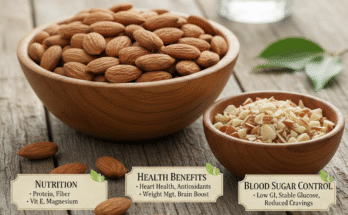
Almond milk, also called badam milk, has skyrocketed in popularity as a plant-based, dairy-free alternative to cow’s milk. Whether you are lactose intolerant, vegan, or simply exploring healthier milk alternatives, almond milk offers an array of health benefits that make it a smart addition to your diet.
What is Almond Milk?
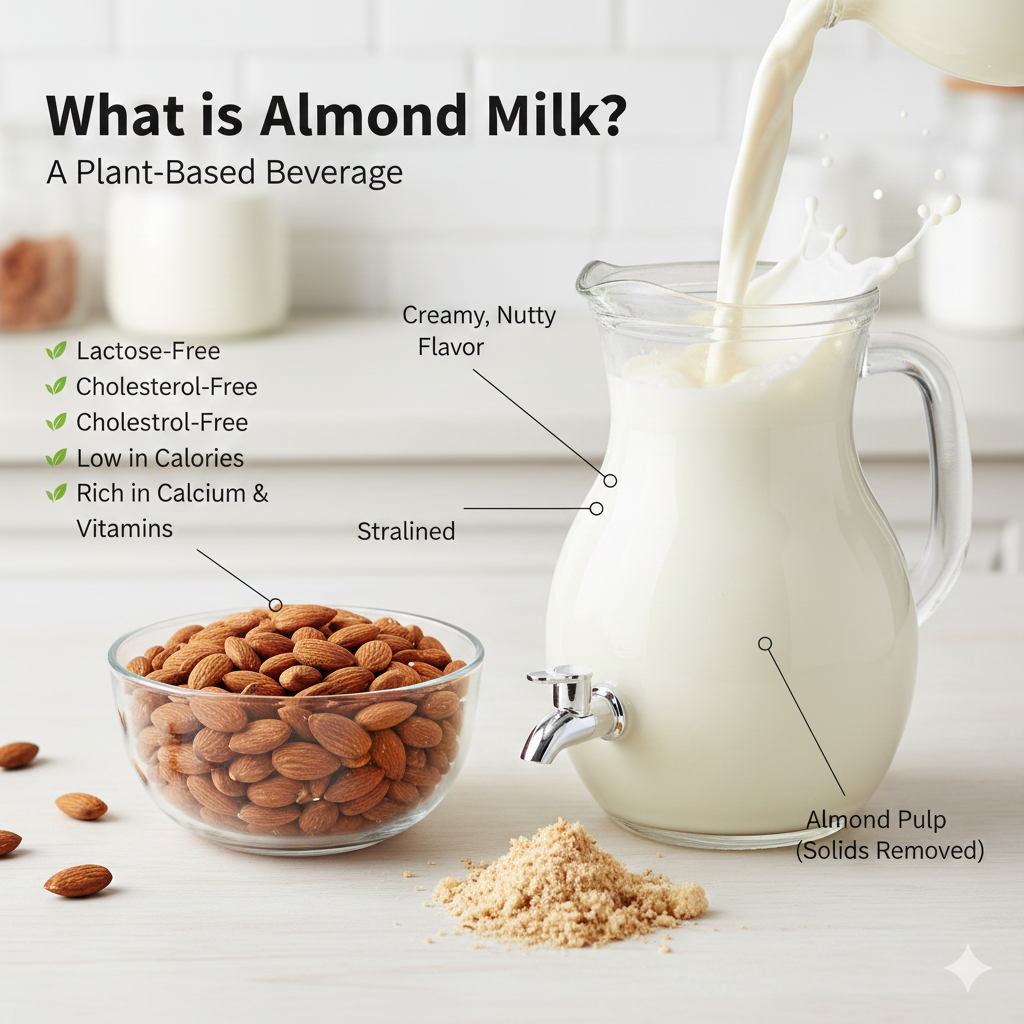
Almond milk is a plant-based beverage made by blending almonds with water and straining out the solids. The resulting liquid has a creamy texture with a mildly nutty flavor. Commercial almond milk may be sweetened or unsweetened and often fortified with nutrients such as calcium, vitamin D, and vitamin A.
Unlike cow’s milk, almond milk is naturally:
Lactose-free
Cholesterol-free
Low in calories
This makes it a versatile option for weight management, heart health, and lactose-intolerant individuals.
Almond Milk Nutrition Facts
The nutritional profile of almond milk varies depending on whether it is sweetened or unsweetened and whether it is fortified. Here’s a comparison per 1 cup (240 ml):
| Nutrient | Unsweetened Almond Milk | Sweetened Almond Milk | Cow’s Milk (2%) |
|---|---|---|---|
| Calories | 30–40 kcal | 90–100 kcal | 122 kcal |
| Protein | 1 g | 1 g | 8 g |
| Fat | 2.5–3 g | 3 g | 5 g |
| Carbohydrates | 1–2 g | 16 g | 12 g |
| Sugars | 0–1 g | 15 g | 12 g |
| Calcium | 450 mg | 451 mg | 309 mg |
| Vitamin D | 2.5 mcg | 2 mcg | 3 mcg |
| Vitamin E | 6–7 mg | 7 mg | <1 mg |
| Potassium | 150 mg | 120 mg | 390 mg |
ilk, has skyrocketed in popularity as a plant-based, dairy-free alternative to cow’s milk. Whether you are lactose intolerant, vegan, or simply exploring healthier milk alternatives, almond milk offers an array of health benefits that make it a smart addition to your diet.
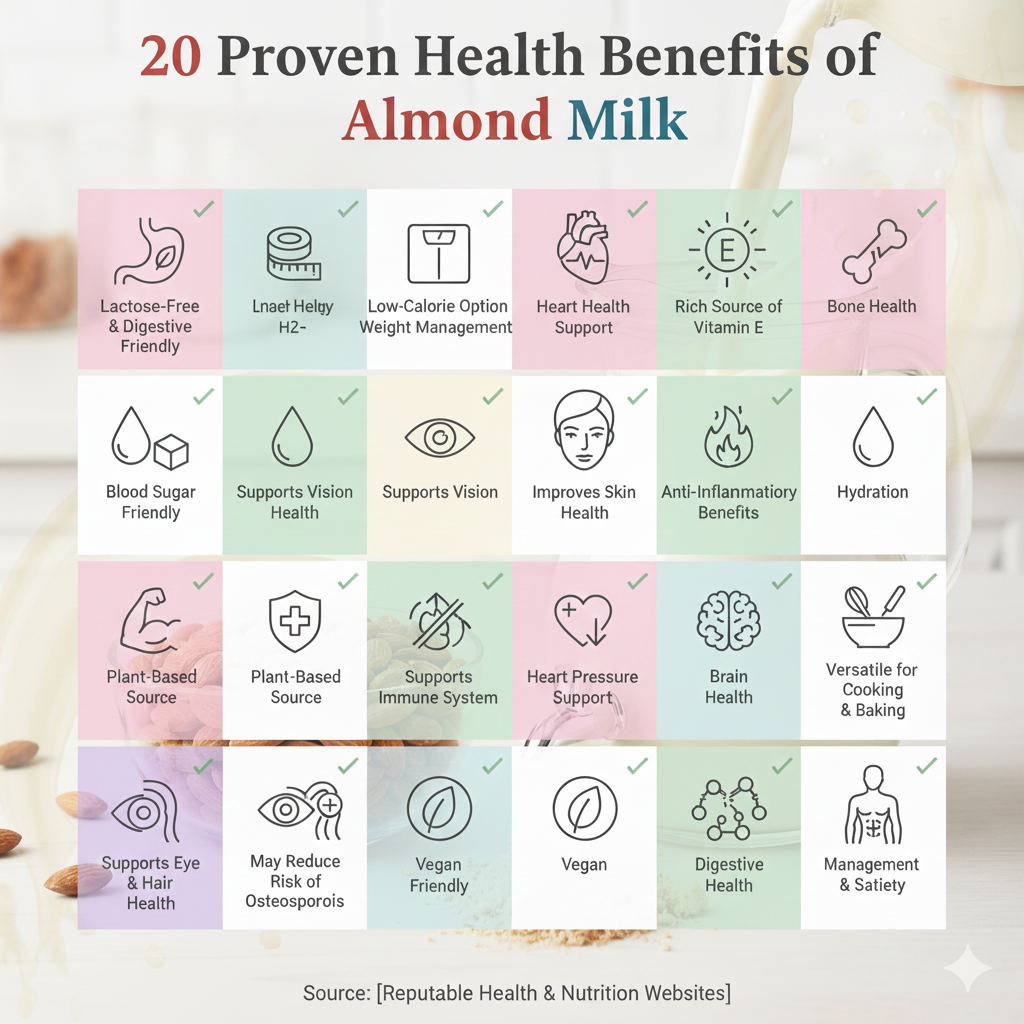
20 Proven Health Benefits of Almond Milk
1. Lactose-Free and Digestive Friendly
Almond milk is naturally free from lactose, making it ideal for those with lactose intolerance or dairy allergies. It is also light on the stomach, making it easy to digest.
2. Low-Calorie Option for Weight Management
Unsweetened almond milk contains only 30–40 calories per cup, making it a great replacement for high-calorie cow’s milk in smoothies, coffee, and recipes. Its monounsaturated fats may also support weight loss and healthy metabolism.
3. Heart Health Support
Almond milk is cholesterol-free and low in saturated fat. This combination supports cardiovascular health and may help maintain healthy cholesterol levels.
4. Rich Source of Vitamin E
Vitamin E is a powerful antioxidant that protects cells from oxidative stress. Just 1 cup of almond milk provides about 50% of your daily vitamin E requirement, supporting immune function, skin health, and heart protection.
5. Bone Health
Fortified almond milk contains calcium and vitamin D, which are essential for strong bones and teeth. Calcium supports bone density, while vitamin D helps the body absorb calcium effectively.
6. Blood Sugar Friendly
Unsweetened almond milk contains only 1 gram of sugar per cup, making it suitable for people with diabetes or those monitoring blood sugar levels.
7. Supports Vision Health
Vitamin A, often added to fortified almond milk, is essential for eye health and immune function. Regular consumption may help prevent oxidative stress in the eyes.
8. Improves Skin Health
Vitamin E and antioxidants in almond milk help nourish the skin, reduce inflammation, and protect against premature aging.
9. Hydration
Almond milk is mostly water, which contributes to daily hydration. It’s also light, making it suitable for drinking on an empty stomach.
10. Anti-Inflammatory Benefits
Vitamin E may reduce chronic inflammation in the body, which is associated with heart disease and other chronic illnesses.
11. Plant-Based Protein Source
While almond milk is low in protein (1–2 grams per cup), it still provides some plant-based protein for vegan and vegetarian diets. Pairing it with protein-rich foods can help balance your daily intake.
12. Supports Immune System
Fortified almond milk contains vitamin D and other micronutrients that help support the immune system.
13. Heart Pressure Support
Low sodium content in almond milk helps maintain healthy blood pressure levels.
14. Brain Health
Healthy fats in almond milk may contribute to cognitive function and overall brain health.
15. Versatile for Cooking and Baking
Almond milk can replace cow’s milk in coffee, smoothies, baking, soups, sauces, and more, making it a flexible dairy substitute.
16. Supports Eye and Hair Health
Vitamin E in almond milk protects eyes from oxidative stress and promotes healthy hair.
17. May Reduce Risk of Osteoporosis
Regular consumption of fortified almond milk ensures adequate calcium and vitamin D intake, supporting bone density and reducing osteoporosis risk.
18. Vegan-Friendly
Almond milk is plant-based, suitable for vegans and those avoiding animal products.
19. Digestive Health
It is easier to digest than cow’s milk and can help prevent bloating and discomfort for sensitive stomachs.
20. Weight Management and Satiety
Low in calories and high in healthy fats, almond milk can help control appetite when used in place of high-calorie alternatives.
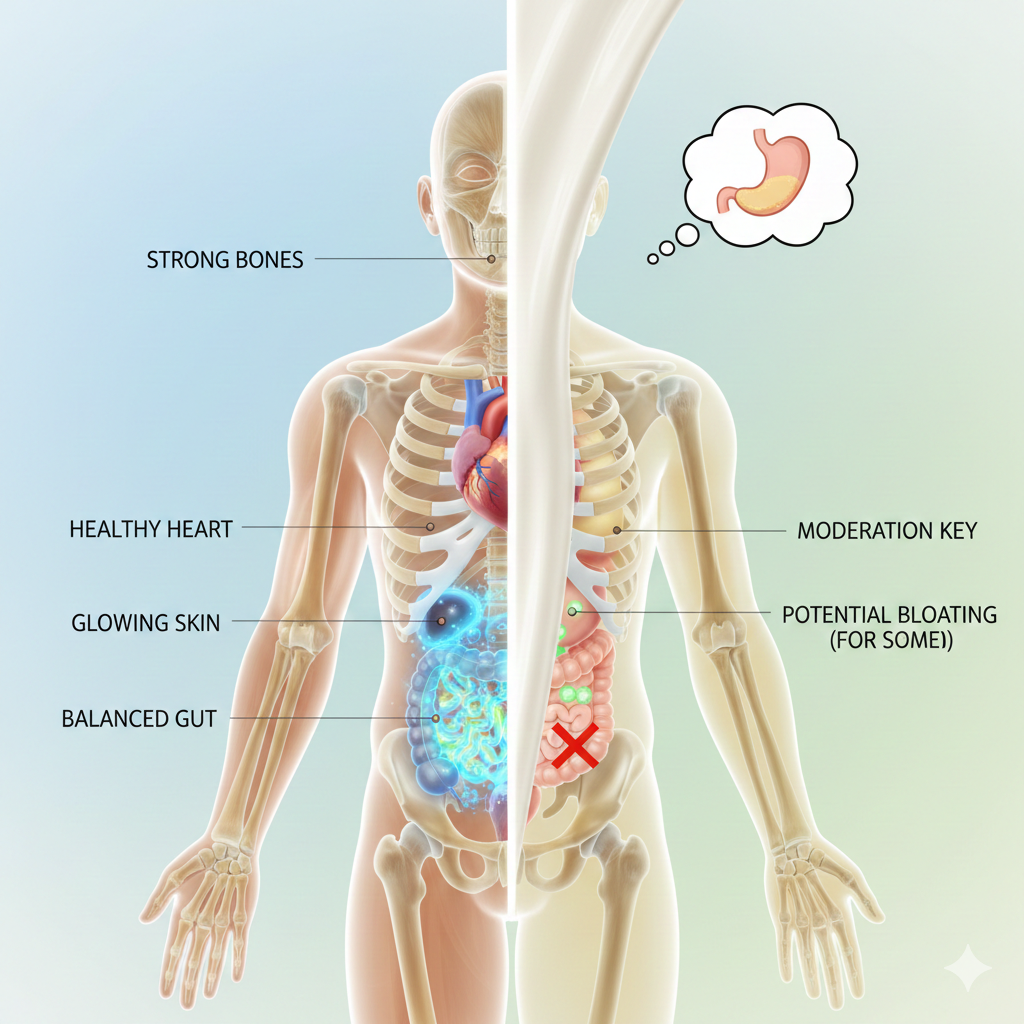
Potential Side Effects of Almond Milk
While almond milk is safe for most people, some may experience:
Allergic reactions: People with nut allergies should avoid almond milk.
Digestive issues: Some may experience bloating or diarrhea.
Low protein intake: Almond milk is not a significant protein source.
Added sugar concerns: Sweetened varieties can spike blood sugar.
Nutrient gaps: Homemade unsweetened versions lack fortification.
Kidney issues: Excessive consumption may pose risks due to oxalates.

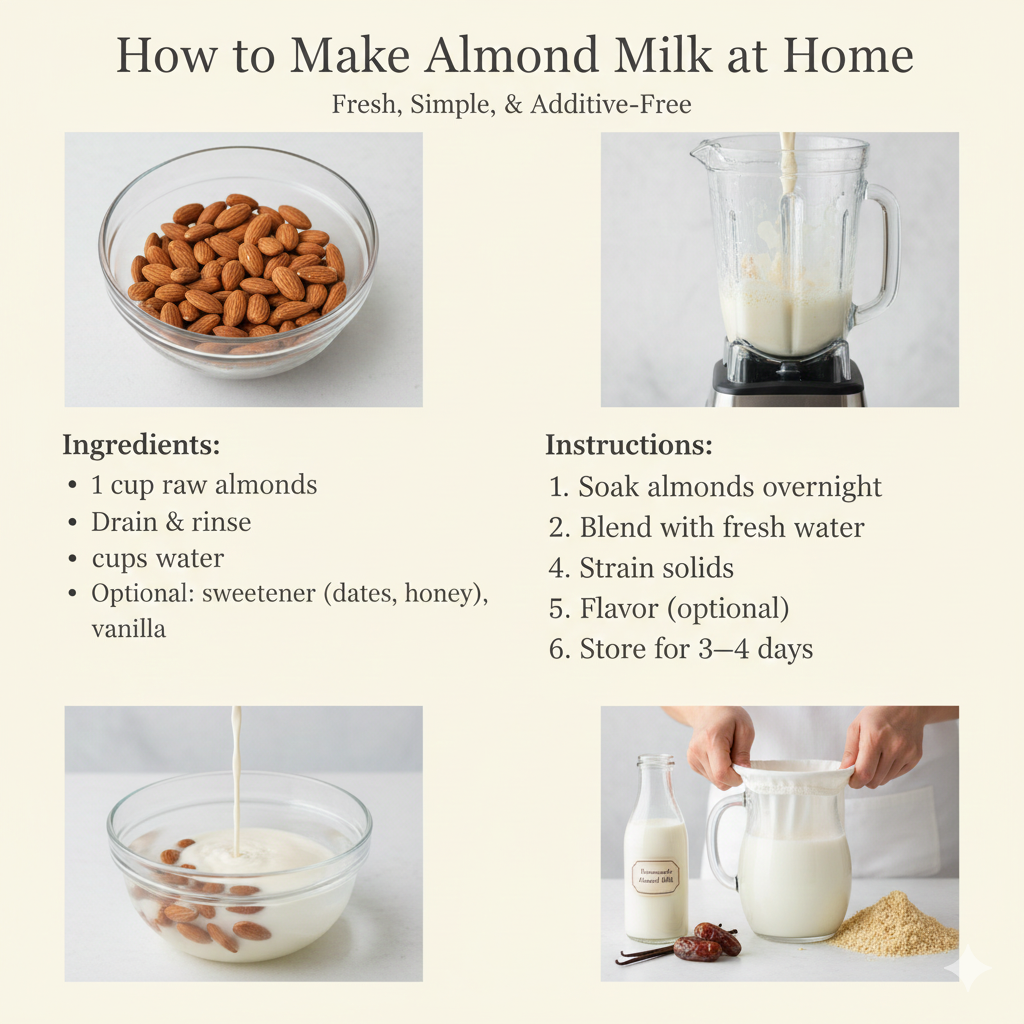
How to Make Almond Milk at Home
Making almond milk at home ensures it is fresh and free from additives.
Ingredients:
1 cup raw almonds
4 cups water
Optional: sweetener (dates, honey, or maple syrup), vanilla extract
Instructions:
Soak almonds in water overnight (8–12 hours).
Drain and rinse almonds.
Blend almonds with fresh water until smooth.
Strain through a nut milk bag or fine cheesecloth.
Add sweeteners or flavors as desired.
Store in the fridge for 3–4 days. Shake before use.
How to Use Almond Milk
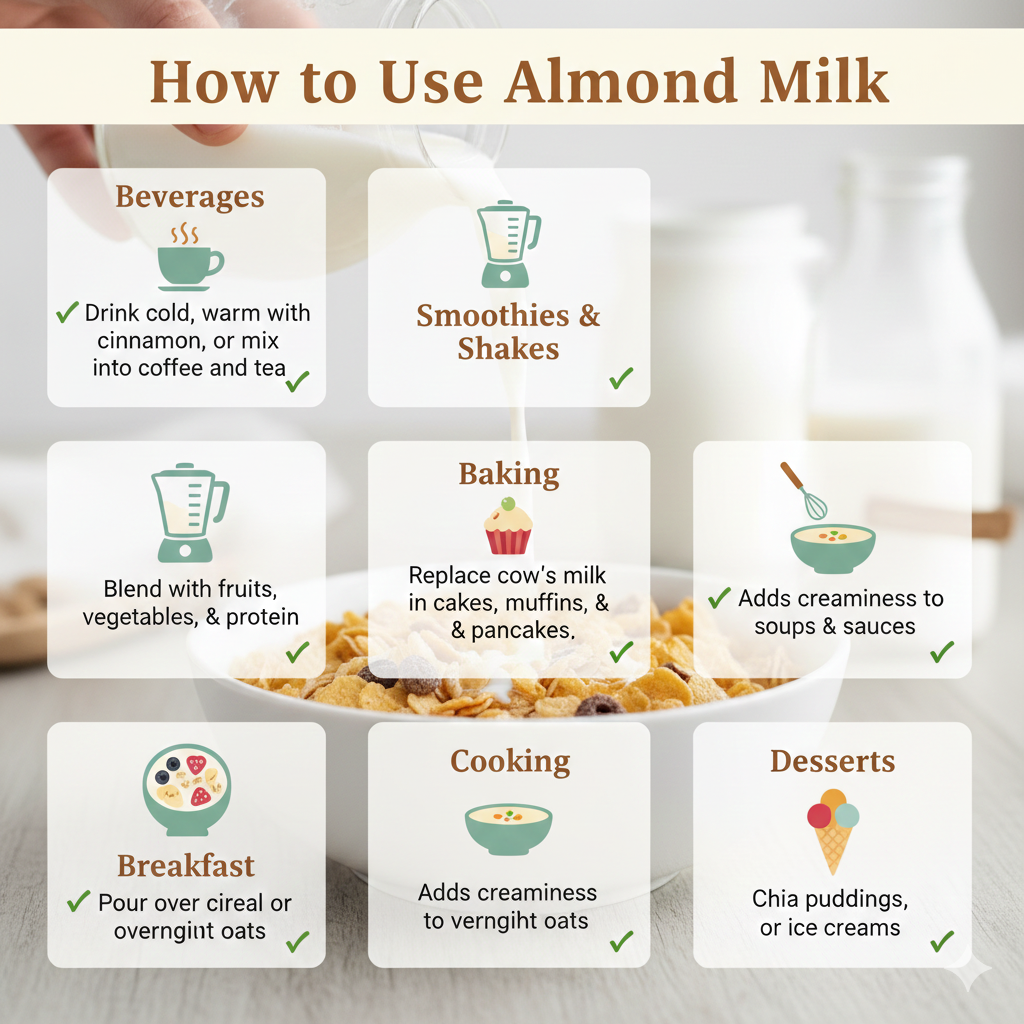
Beverages: Drink cold, warm with cinnamon, or mix into coffee and tea.
Smoothies & Protein Shakes: Blend with fruits, vegetables, and protein powder.
Baking: Replace cow’s milk in cakes, muffins, and pancakes.
Soups & Sauces: Adds creaminess without dairy.
Breakfast: Pour over cereal or overnight oats.
Desserts: Make chia puddings, puddings, or ice creams.
Tips for Optimal Consumption
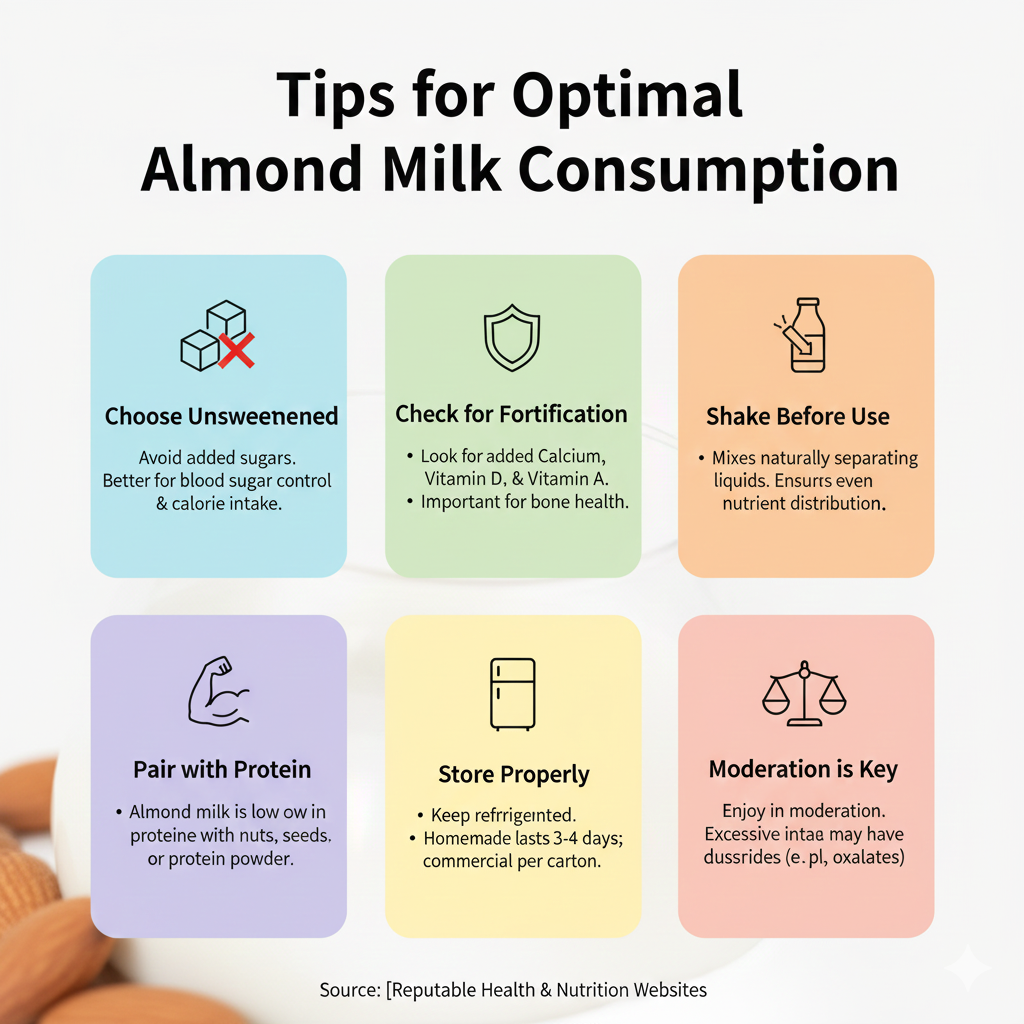
Choose unsweetened almond milk to avoid added sugars.
Check labels for fortified vitamins and minerals.
Shake before use to mix naturally separating liquids.
Combine with protein sources if using as a primary milk substitute.
Store properly in the fridge; homemade almond milk lasts 3–4 days.
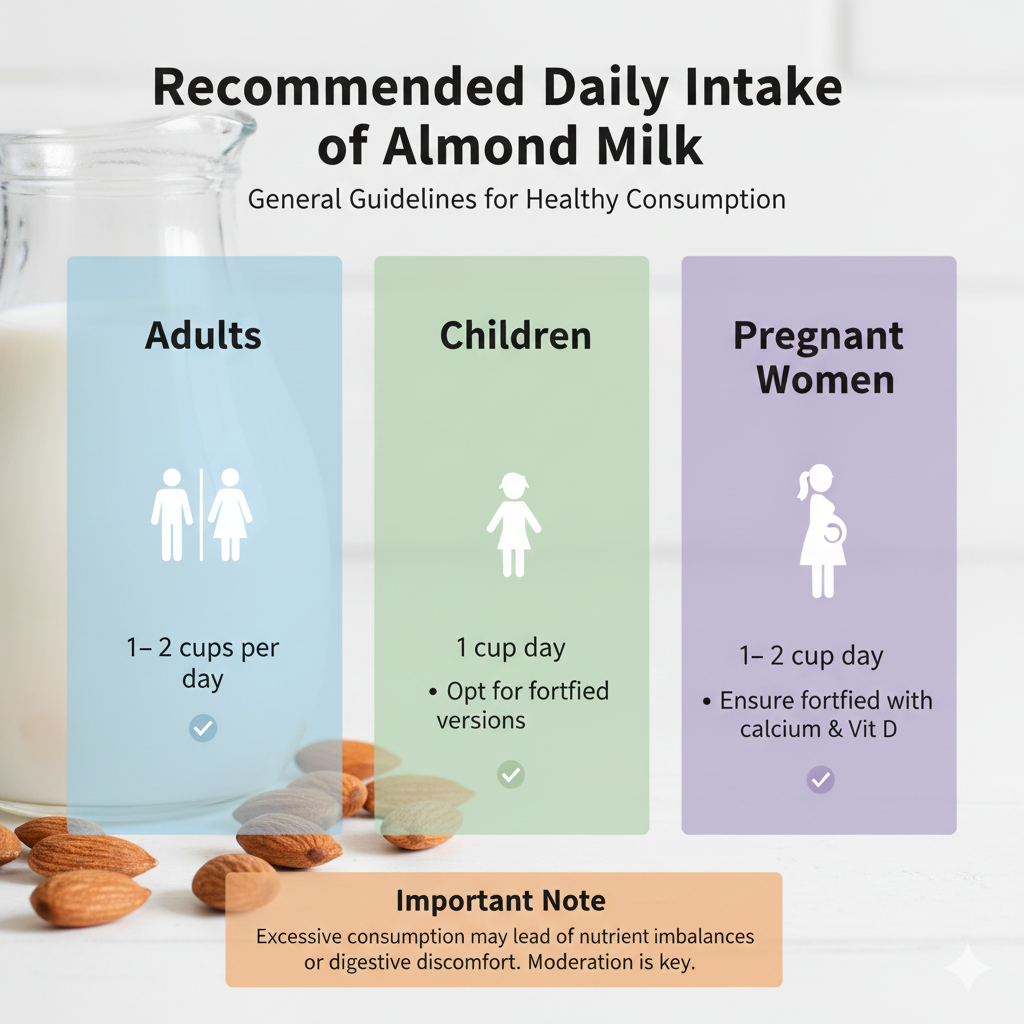
Recommended Daily Intake
Adults: 1–2 cups per day
Children: 1 cup per day (fortified)
Pregnant Women: 1–2 cups per day (fortified)
Excessive consumption may cause nutrient imbalances or digestive discomfort.
Frequently Asked Questions (FAQ)
1. Is almond milk safe every day?
Yes, 1–2 cups daily is safe for most adults, especially unsweetened and fortified varieties.
2. Can children drink almond milk?
Yes, but choose fortified versions, and ensure they get enough protein from other sources.
3. Does almond milk help with weight loss?
Yes, unsweetened almond milk is low in calories and can replace higher-calorie milk options.
4. Is almond milk high in sugar?
Unsweetened almond milk is very low in sugar. Sweetened varieties can contain high added sugars.
5. Can almond milk improve skin?
Yes, thanks to vitamin E and antioxidants.
6. Can pregnant women drink almond milk?
Yes, fortified almond milk provides calcium, vitamin D, and healthy fats suitable during pregnancy
Conclusion
Almond milk is a delicious, nutrient-rich, plant-based alternative to dairy milk. It is ideal for lactose-intolerant individuals, vegans, and those looking for a low-calorie, heart-friendly beverage.
By choosing unsweetened and fortified almond milk, you can enjoy numerous health benefits, from bone health and antioxidant support to weight management and improved skin health. Incorporate almond milk into your daily diet through smoothies, coffee, baking, or even DIY skincare routines, and enjoy this versatile, dairy-free superdrink safely every day.