Chia seeds are one of the most nutrient-dense foods in the world. They’re tiny, but they’re loaded with omega-3s, plant-based protein, fiber, antioxidants, and essential vitamins and minerals that support energy, digestion, heart health, skin health, and overall wellness.
If you’re following our Chia Seeds Pillar Series on AnaayaFoods, this nutrition guide is your go-to reference for understanding chia seed macros and micros — in 100g, 1 tbsp, and 1 oz formats.
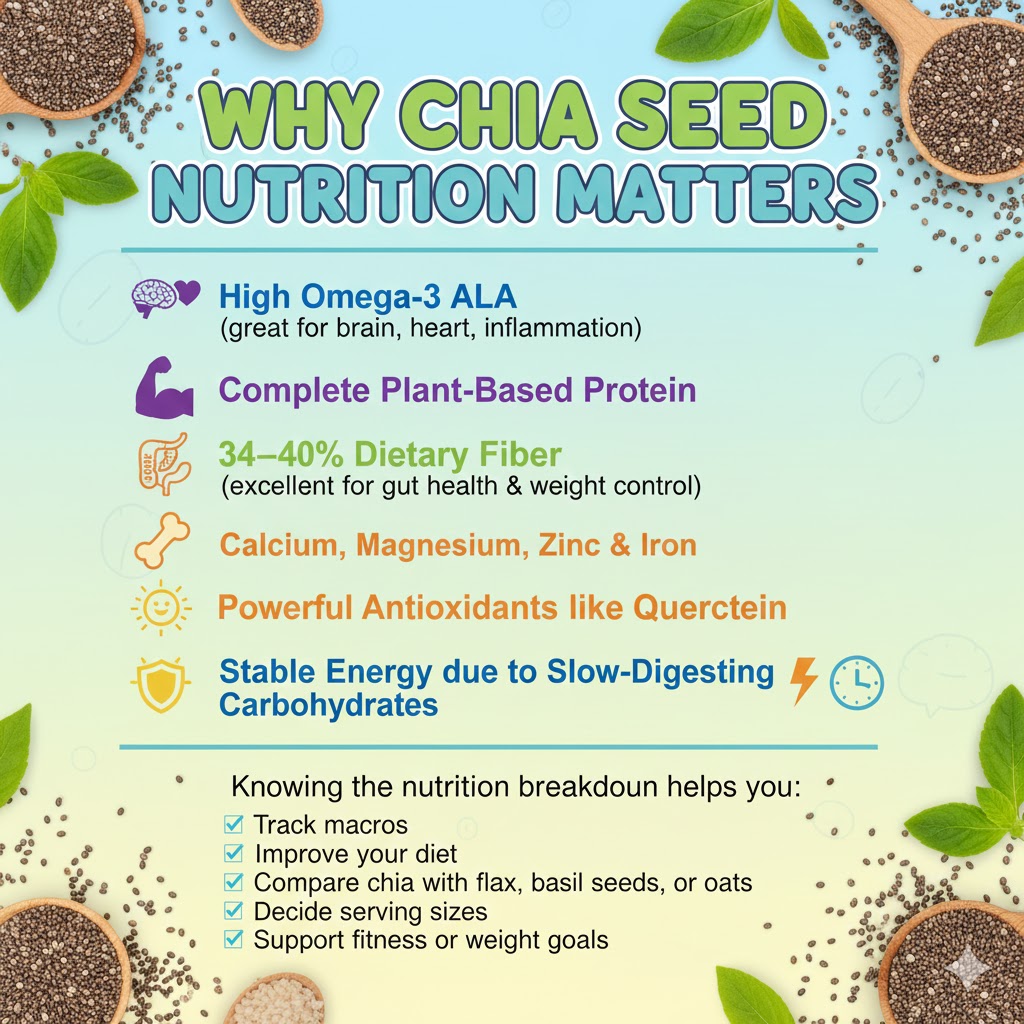
Why Chia Seed Nutrition Matters
Chia seeds are considered a superfood because they provide:
- High omega-3 ALA (great for brain, heart, inflammation)
- Complete plant-based protein with all 9 amino acids
- 34–40% dietary fiber (excellent for gut health & weight control)
- Calcium, magnesium, zinc & iron
- Powerful antioxidants like quercetin
- Stable energy due to slow-digesting carbohydrates
Knowing the nutrition breakdown helps you:
- Track macros
- Improve your diet
- Compare chia with flax, basil seeds, or oats
- Decide serving sizes
Support fitness or weight goals
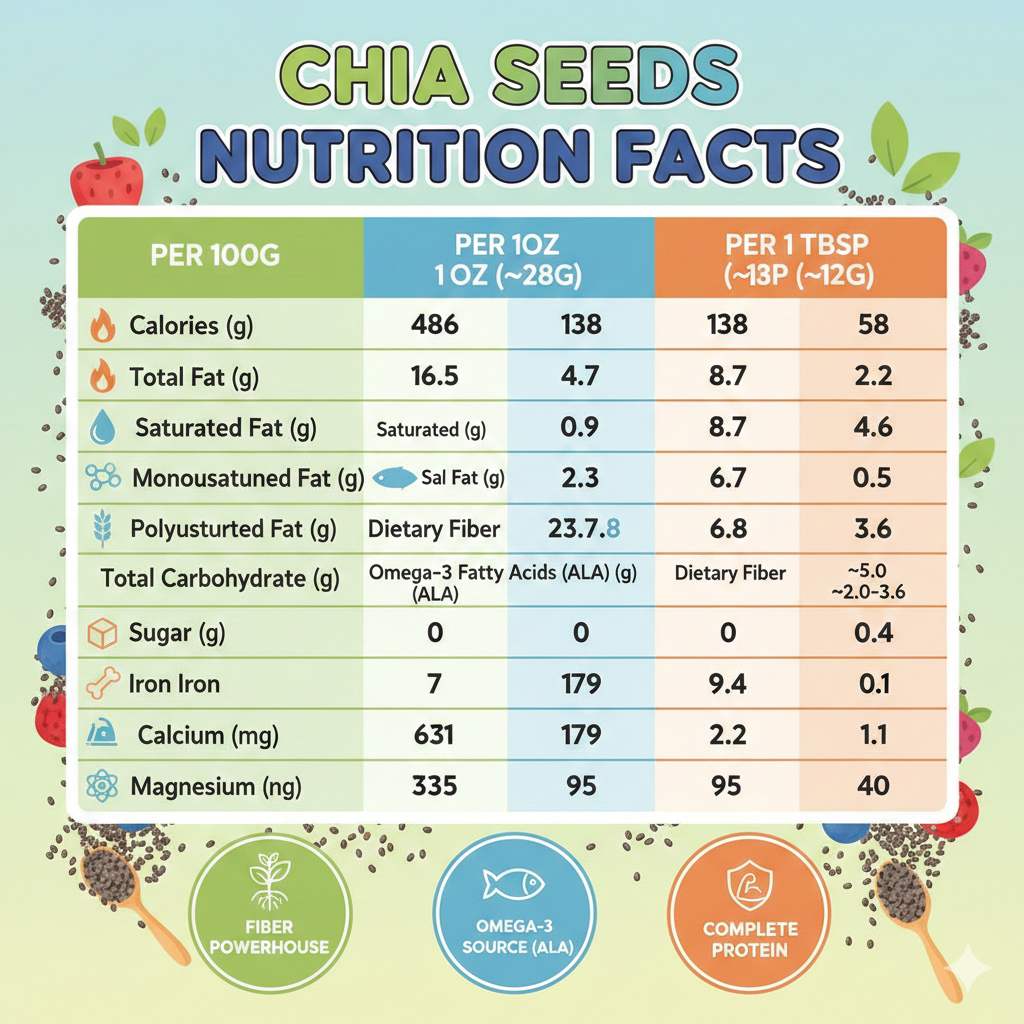
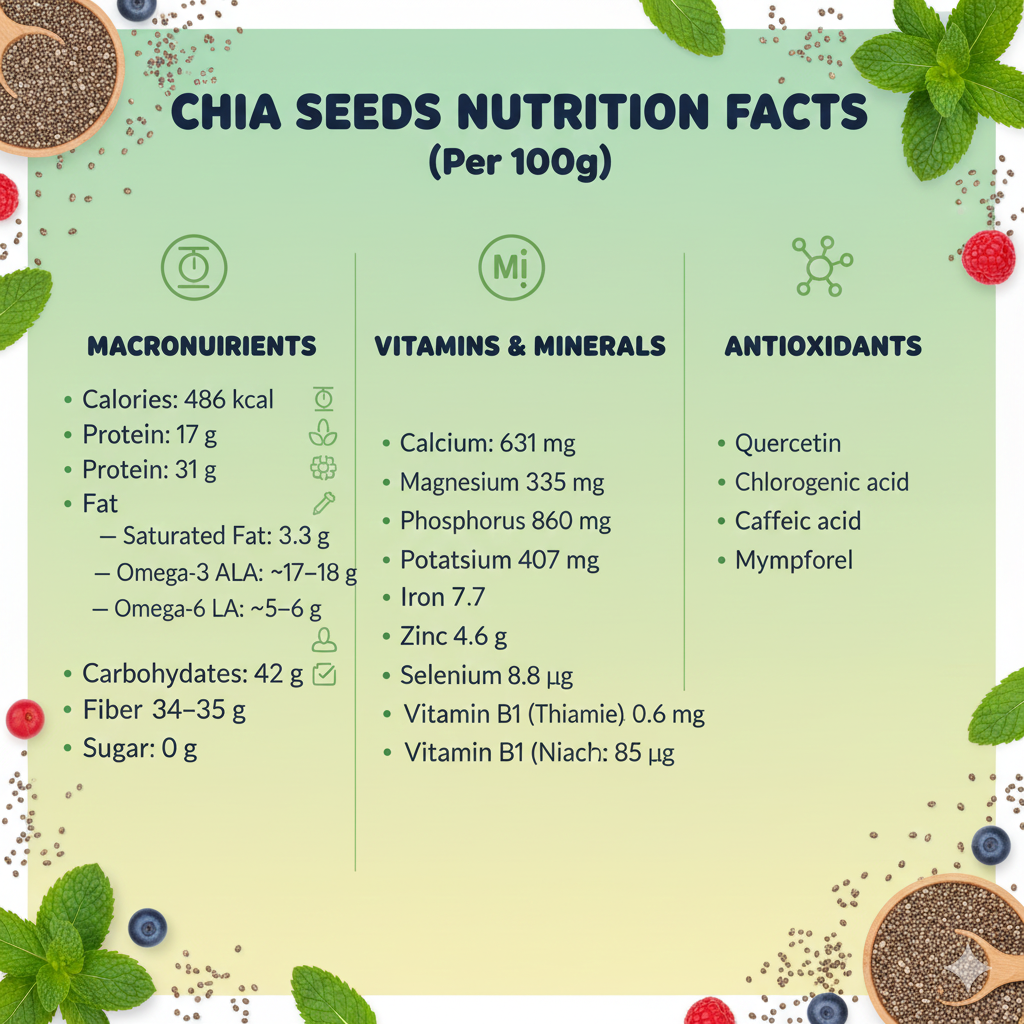
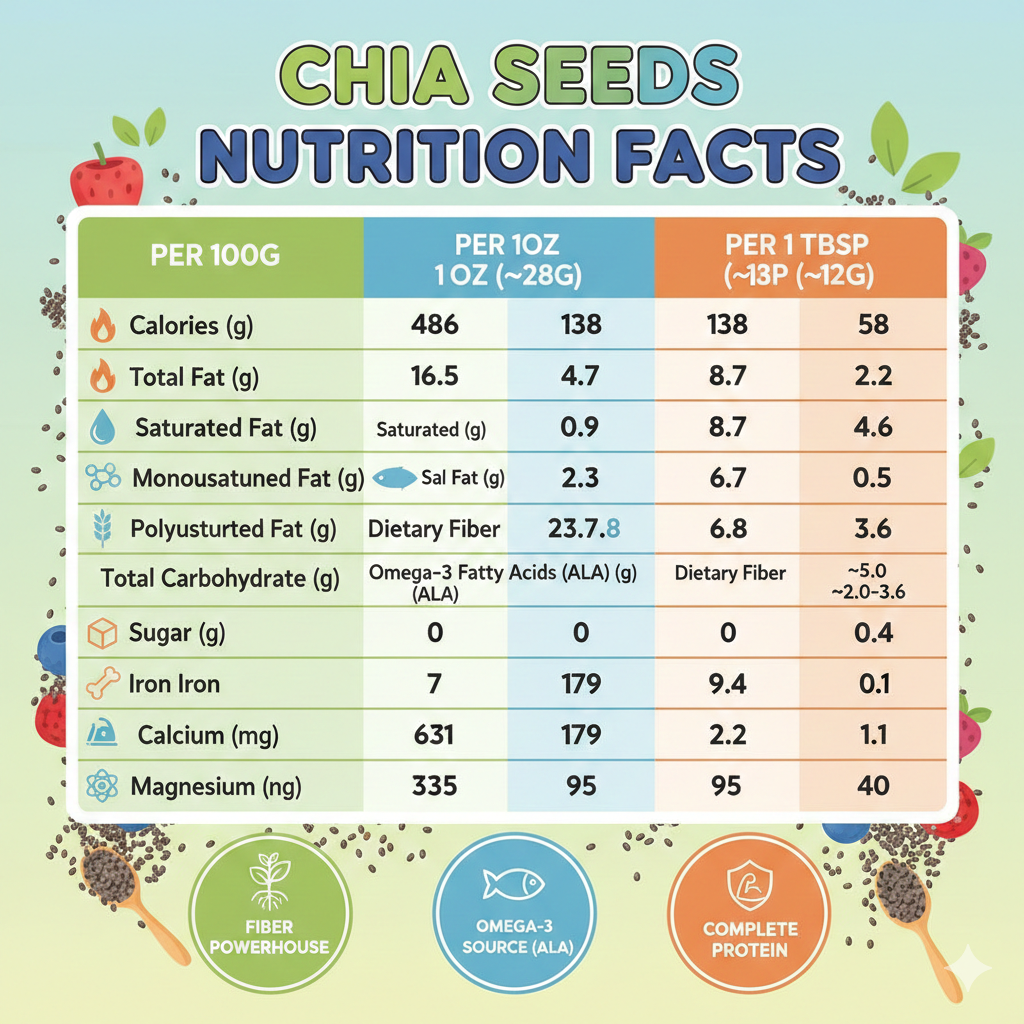
Chia Seeds Nutrition Facts (Per 100g)
Below is the full nutrition profile per 100 grams:
Calories: 486 kcal
Protein: 17 g
Fat: 31 g
Saturated Fat: 3.3 g
Omega-3 ALA: ~17–18 g
Omega-6 LA: ~5–6 g
Carbohydrates: 42 g
Fiber: 34–35 g
Sugar: 0 g
Vitamins & Minerals:
- Calcium: 631 mg
- Magnesium: 335 mg
- Phosphorus: 860 mg
- Potassium: 407 mg
- Iron: 7.7 mg
- Zinc: 4.6 mg
- Selenium: 55 μg
- Vitamin B1 (Thiamine): 0.6 mg
- Vitamin B3 (Niacin): 8.8 mg
Antioxidants:
- Quercetin
- Chlorogenic acid
- Caffeic acid
- Myricetin
- Kaempferol
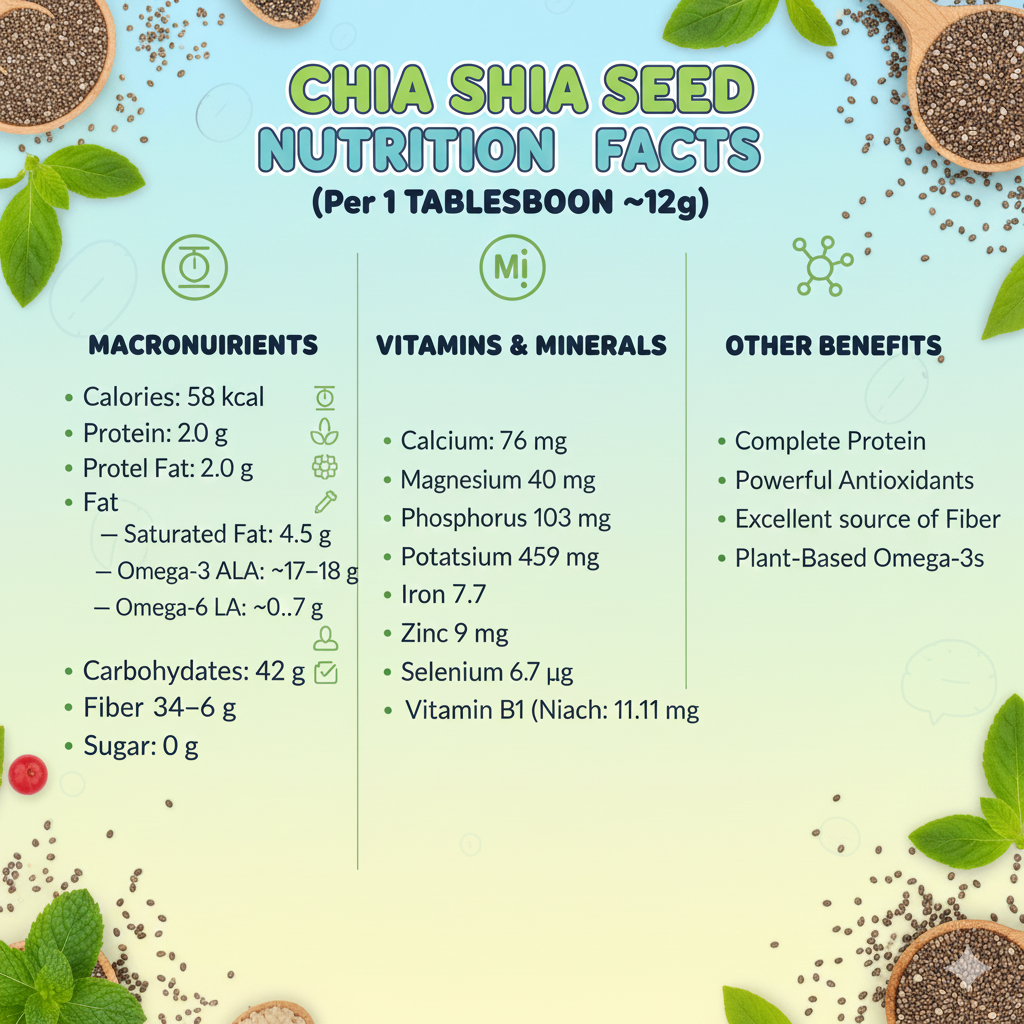
Chia Seeds Nutrition Per 1 Tablespoon (12g)
Calories: ~58 kcal
Protein: 2 g
Fat: 3.7 g
Fiber: 4.1 g
Carbs: 5 g
Omega-3: ~2.1 g
Calcium: 75 mg
Magnesium: 40 mg
Phosphorus: 103 mg
Zinc: 0.5 mg
Why 1 Tbsp matters:
This is the most common serving size for chia pudding, detox drinks, smoothies, oatmeal, and baking.
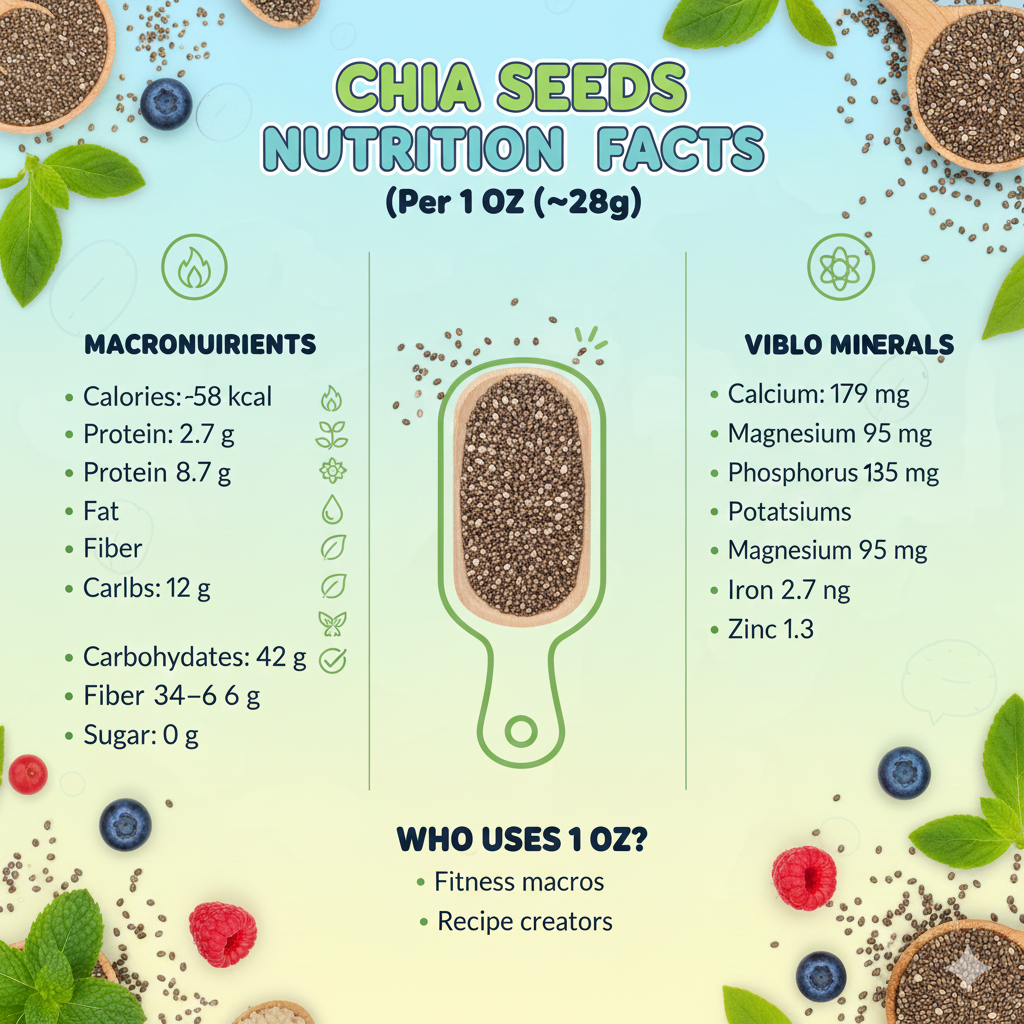
Chia Seeds Nutrition Per 1 oz (28g)
Calories: ~138 kcal
Protein: 4.7 g
Fat: 8.7 g
Fiber: 9.8 g
Carbs: 12 g
Omega-3: ~5 g
Calcium: 179 mg
Magnesium: 95 mg
Phosphorus: 239 mg
Zinc: 1.3 mg
Who uses 1 oz?
Fitness macros, keto trackers, and recipe creators often measure per ounce
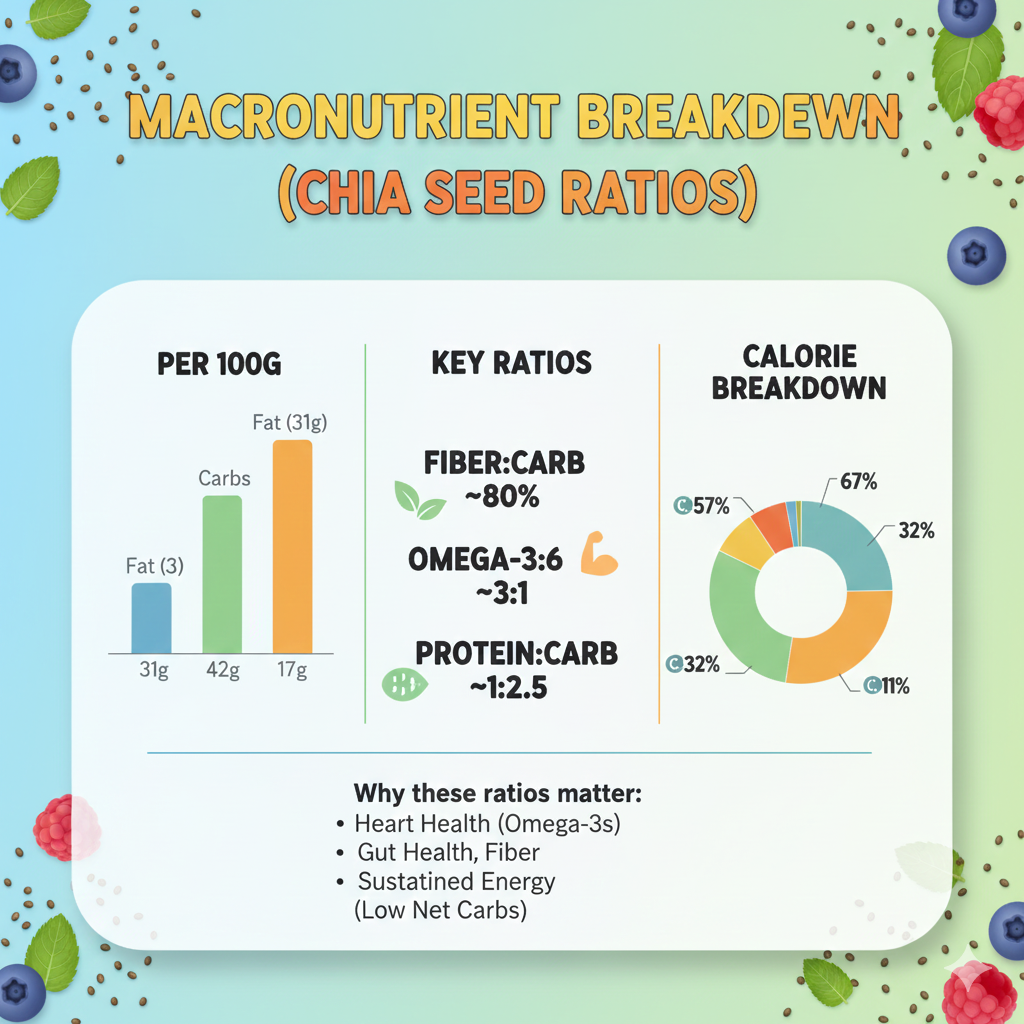
Macronutrient Breakdown (Chia Seed Ratios)
Per 100g:
- Fiber: 34%
- Fat: 31%
- Protein: 17%
- Carbs (net): 7–8%
Chia seeds are low-carb, high-fiber, and high-omega-3, making them ideal for:
- Weight loss
- Keto diets
- Gut health
- Anti-inflammatory diets
- Heart health support
Omega-3 Content: The Highlight of Chia Nutrition
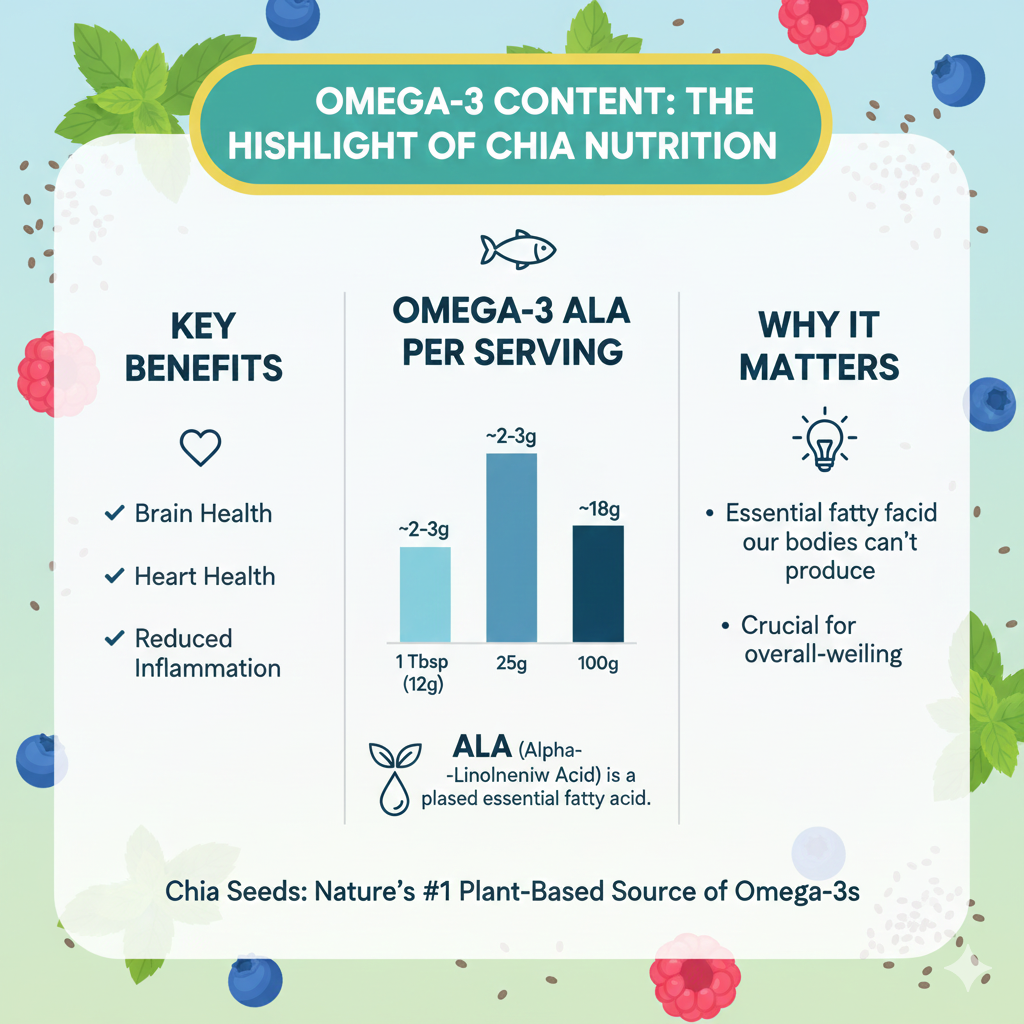
Chia seeds are one of the richest plant sources of omega-3 ALA.
Comparison:
- Chia seeds (per 100g): 17–18 g omega-3
- Flax seeds: 22 g
- Walnuts: 9 g
- Salmon: 4 g (EPA/DHA, more bioavailable)
Even though chia provides ALA (not EPA/DHA), the overall anti-inflammatory benefits are well-documented.
Fiber: The Most Important Benefit
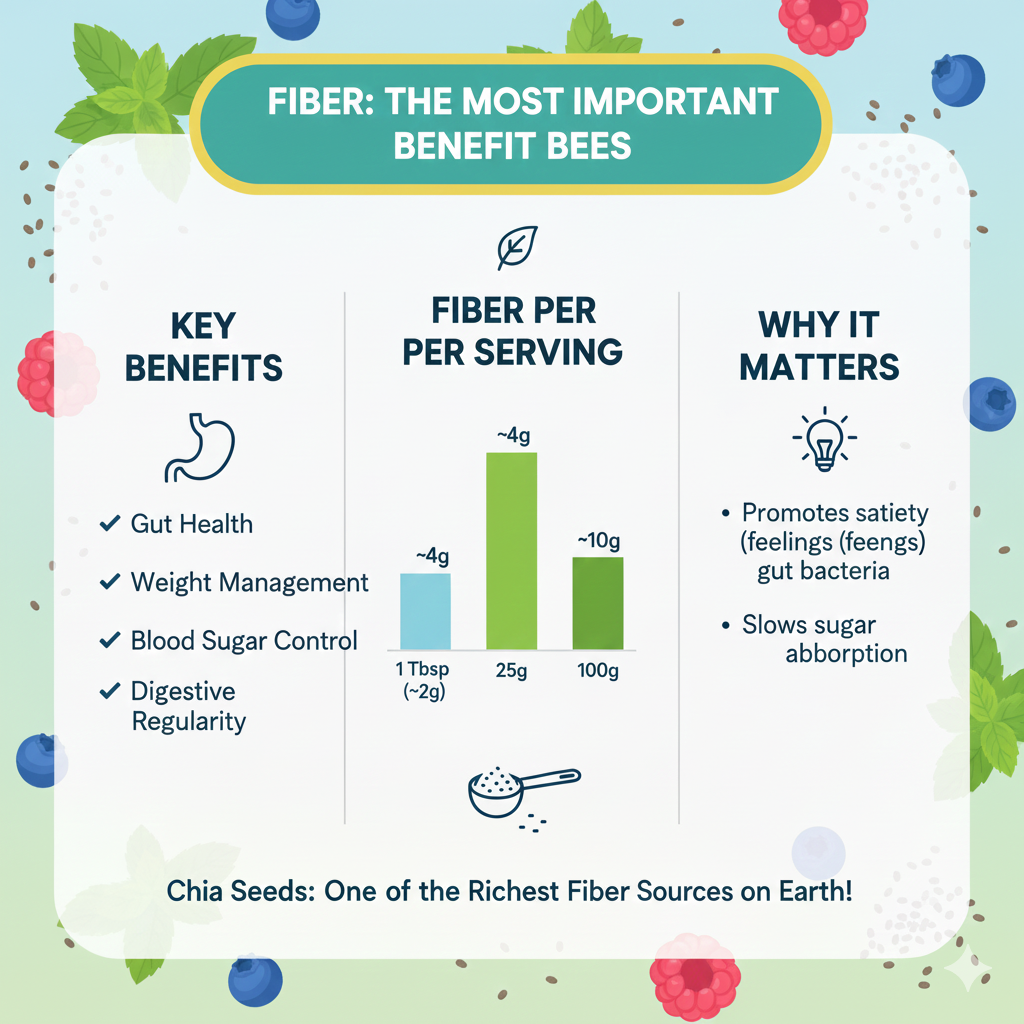
A huge 35 grams of fiber per 100g makes chia one of the top natural fiber sources.
Benefits linked to fiber include:
- Improved digestion
- Reduced bloating
- Better bowel movements
- Feeling full for longer
- Blood sugar regulation
This is why chia seeds are so often recommended in:
weight loss diets, detox drinks, constipation relief routines, and gut-healthy recipes.
Protein: Complete Plant-Based Protein
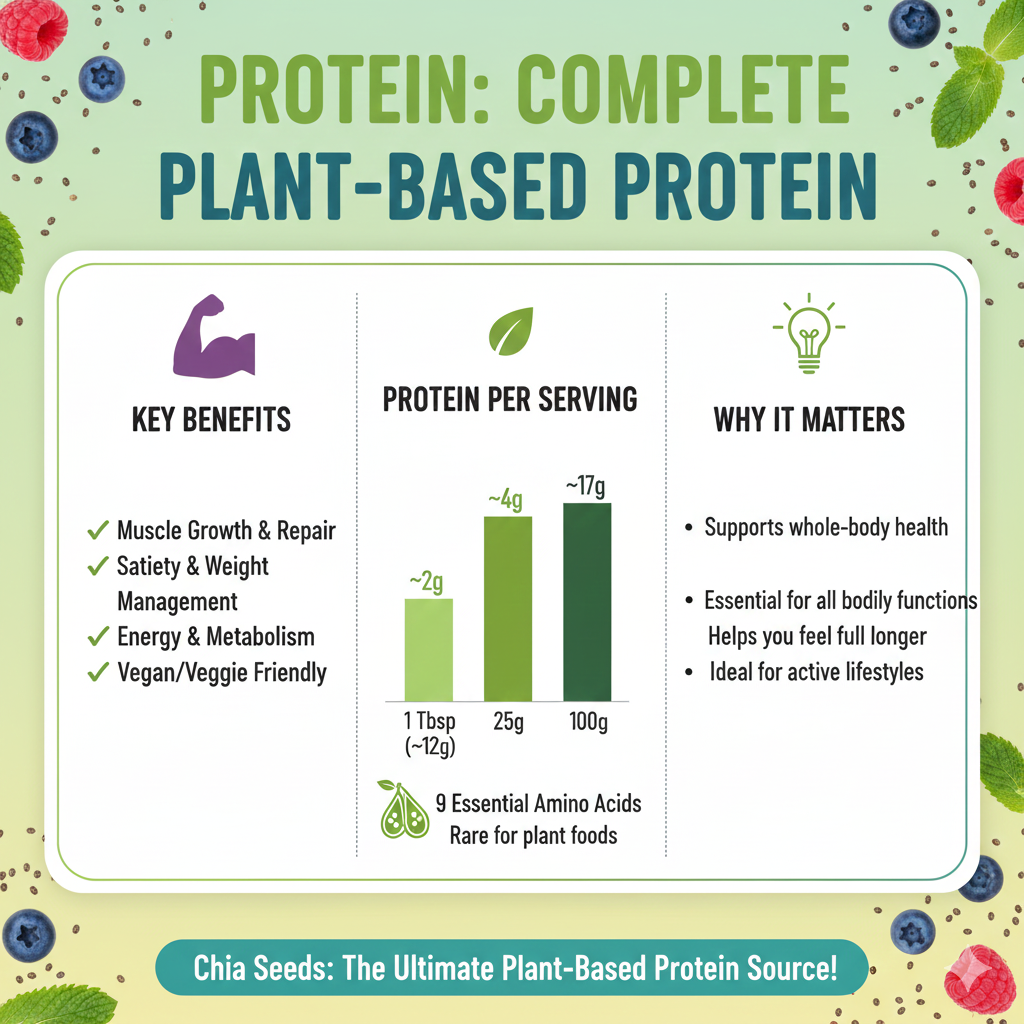
Chia seeds contain all 9 essential amino acids — rare in plant foods.
Protein per serving:
- 1 tbsp: 2 g
- 1 oz: 4.7 g
- 100g: 17 g
Chia is especially valued by:
- Vegans
- Bodybuilders
- Runners
- Meal-prep users
Compared with oats, chia has more protein and more fiber, gram for gram.
Minerals: A Nutrient Powerhouse
Chia seeds contain more key minerals than many common foods.
Calcium
- 100g chia: 631 mg
(≈ more calcium than dairy milk per gram)
Magnesium
- 100g chia: 335 mg
(Excellent for muscles & sleep)
Iron
- 7.7 mg per 100g
(Useful for energy & hemoglobin)
Zinc
- 4.6 mg per 100g
(Boosts immune system & skin)
These minerals support energy, muscle function, bone strength, and hormonal balance
Antioxidants in Chia Seeds
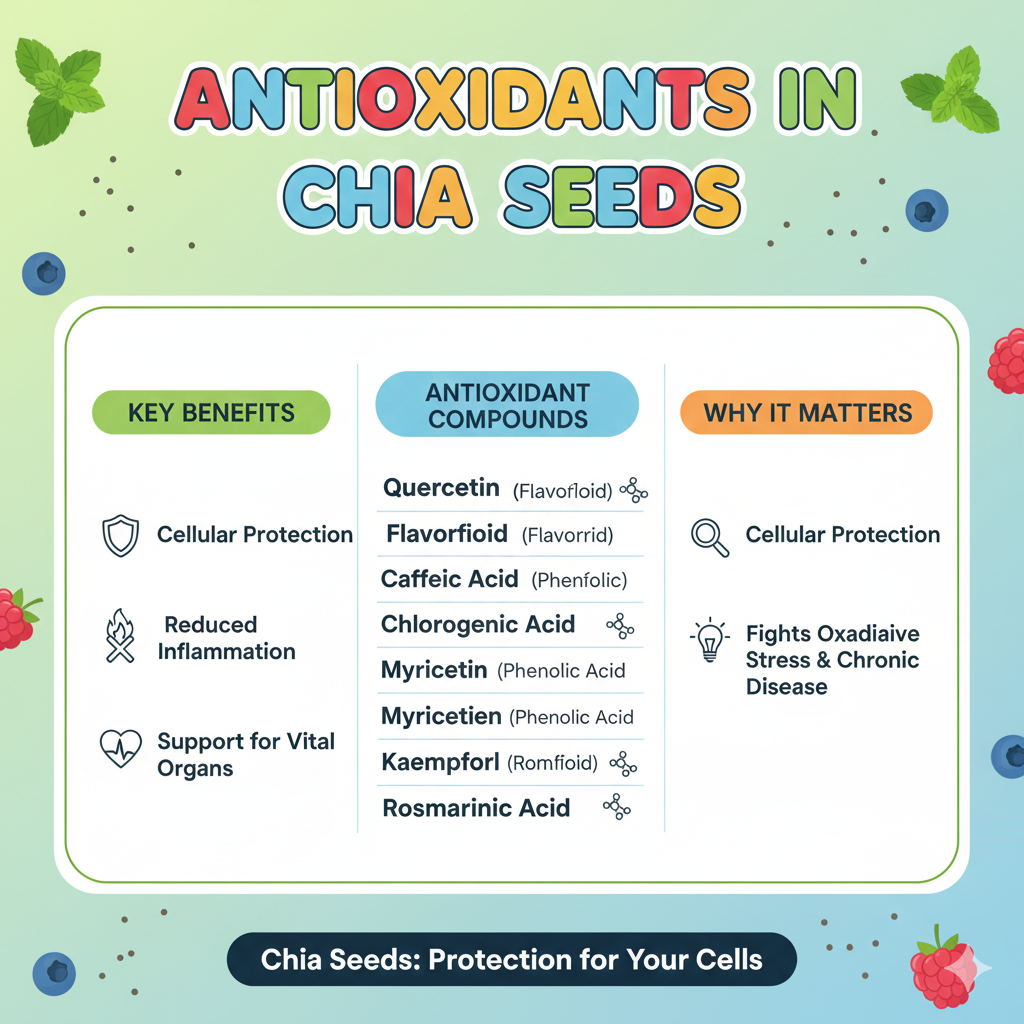
Chia seeds are rich in polyphenol antioxidants that help fight inflammation and oxidative stress.
Key antioxidants include:
- Quercetin
- Chlorogenic acid
- Caffeic acid
- Kaempferol
- Isorhamnetin
These compounds help support:
- Skin health
- Anti-aging
- Recovery from stress
- Immunity
Chia Seeds vs Flax Seeds: Nutrition Comparison
(Internal linking reference to Cluster Article 1)
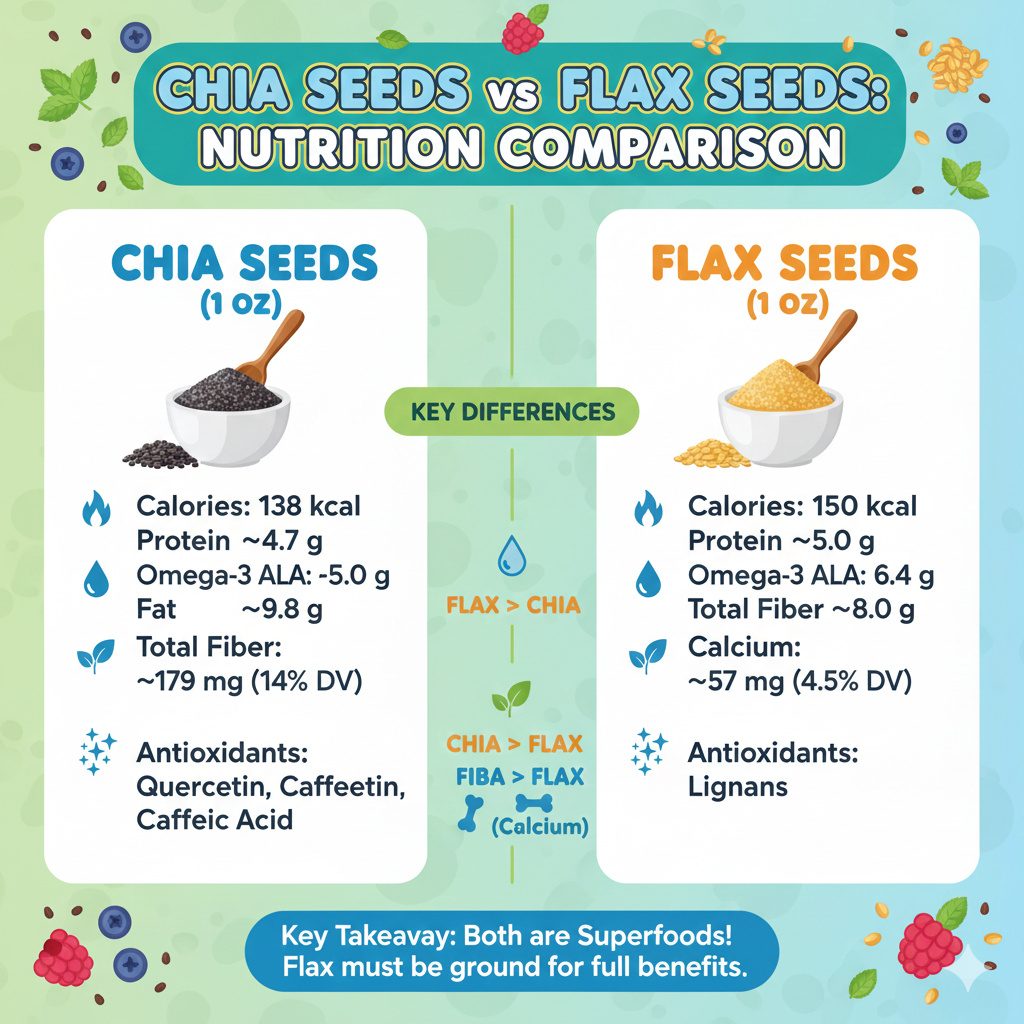
Nutrient | Chia | Flax |
Omega-3 | 17g | 22g |
Fiber | 34g | 27g |
Protein | 17g | 18g |
Calcium | Higher | Lower |
Shelf-life | Longer | Shorter (can go rancid) |
Both are superfoods — chia is often preferred for stability and digestive ease
Serving Sizes: How Much Chia Should You Eat Per Day?
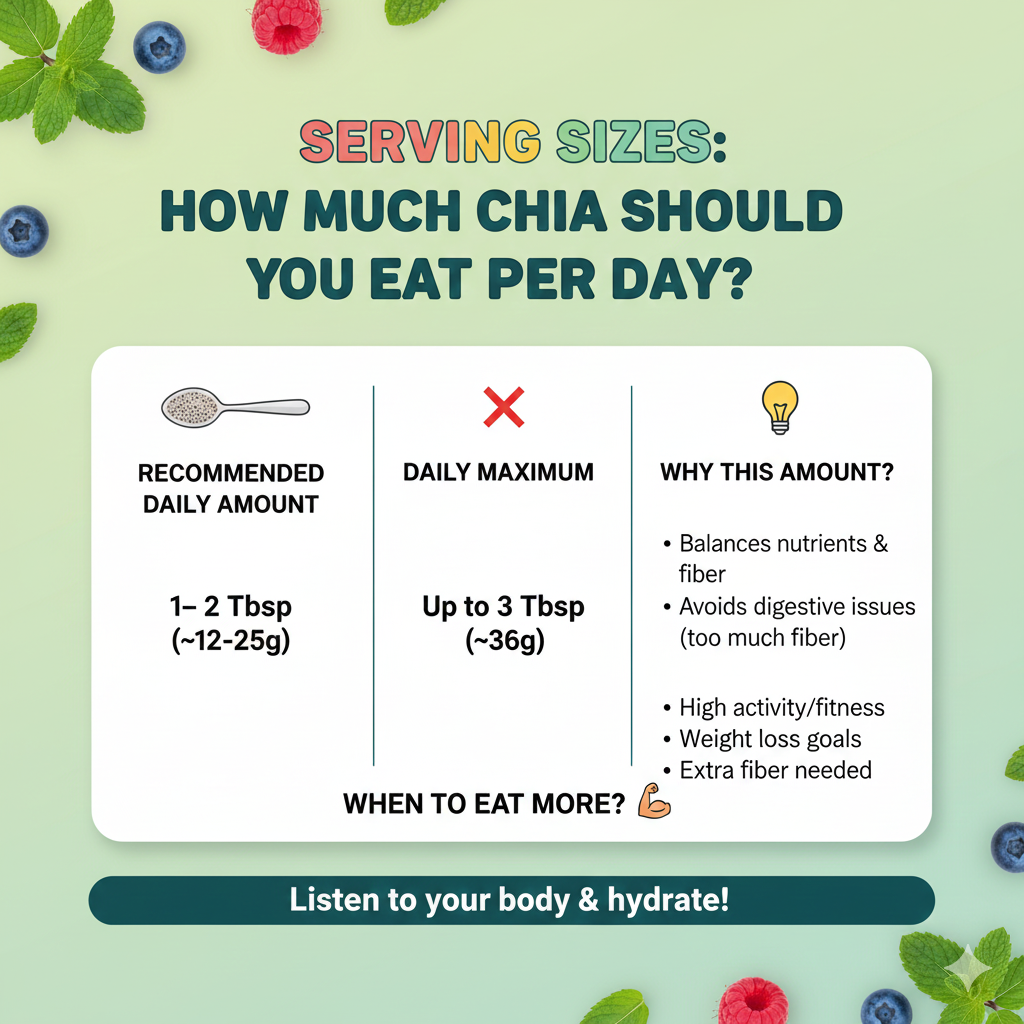
For most people:
- 1–2 tablespoons per day = ideal
- 6 teaspoons = daily recommended maximum
- Spread into multiple meals for better digestion
Frequently Asked Questions (SEO Optimized)
1. Are chia seeds high in calories?
Chia seeds are calorie-dense, but they provide long-lasting energy and essential nutrients.
2. Are chia seeds high in carbohydrates?
They contain carbs, but most of it is fiber, meaning chia is very low in net carbs.
3. Are chia seeds good for weight loss?
Yes — they expand in the stomach, promote fullness, and prevent cravings.
4. Do chia seeds have sugar?
No — chia seeds contain 0 grams of sugar.
5. What nutrients make chia seeds a superfood?
Omega-3s, fiber, complete protein, antioxidants, calcium, magnesium, and phosphorus.
Conclusion: Why This Nutrition Chart Matters
Understanding chia seed nutrition is essential for optimizing your diet. Whether you’re tracking macros, improving digestion, boosting energy, or supporting brain and heart health — chia seeds are one of the simplest and most powerful foods you can add to your daily routine.
This nutrition guide supports our complete chia seed series on AnaayaFoods.com and strengthens your topical authority around nutrition, food science, and wellness content.